For years, homeowners have been told that modern A-rated condensing boilers are more than 90% efficient. But according to home energy experts at Dwellow, many households may never see those headline figures in practice.
The reason lies not with the boiler itself, but with how it's set up and operated.
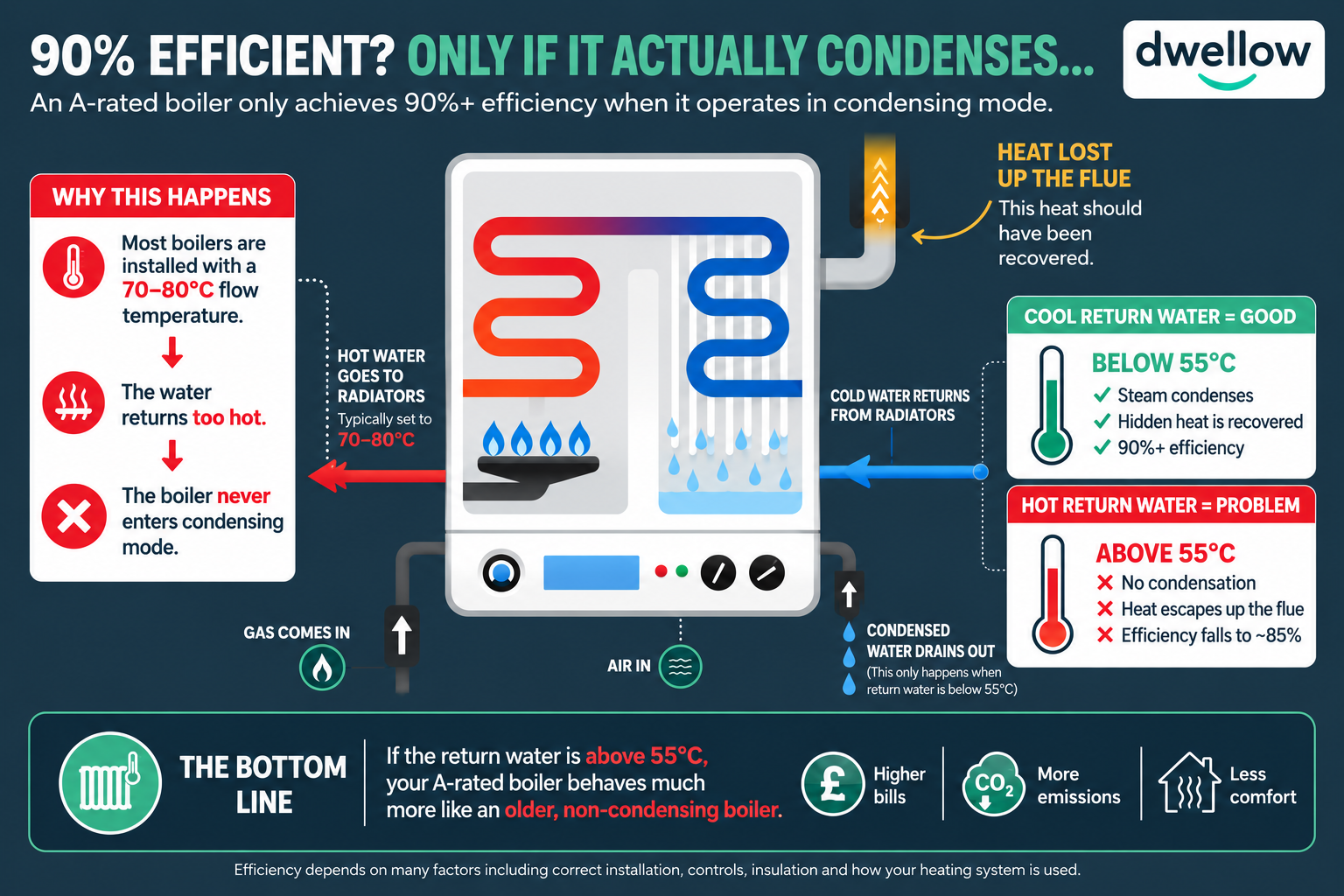
Condensing boilers only achieve their advertised efficiencies when they are running in condensing mode, a process that captures additional heat from the hot exhaust gases before they leave the flue.
For this to happen, the water returning from the home's radiators must be below around 55°C. If it's any hotter, the water vapour in the exhaust gases cannot condense effectively, meaning valuable heat can simply disappear up the flue.
The problem, says Dwellow, is that many boilers are commissioned by engineers with flow temperatures of 70–80°C to ensure homes heat up quickly and reduce the likelihood of customer complaints.
"Most homeowners assume that because they've bought an A-rated boiler, it's automatically running at over 90% efficiency every day," said Ian McLaren, co-founder of Dwellow.
"The reality is that those efficiencies depend on the boiler actually condensing. If the return temperature stays too high, you're simply not getting the full benefit of the technology you've paid for."
How efficient is your heating system?
A modern condensing gas boiler may achieve efficiencies of around 90% or more under favourable conditions, meaning roughly nine-tenths of the energy in the gas is converted into useful heat.
In real homes, however, performance depends on factors including flow and return temperatures, controls, system design and how the boiler is operated.
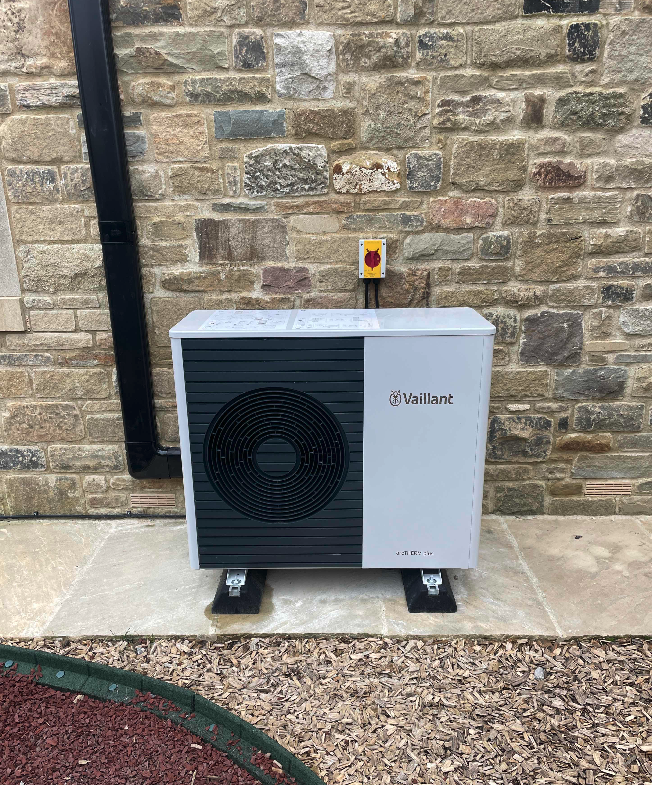
Heat pumps work very differently. Rather than creating heat through combustion, they move heat from outside into the home. A well-designed modern heat pump might achieve a Seasonal Coefficient of Performance (SCOP) of between 3 and 4 – delivering around three to four units of heat for every unit of electricity consumed over the heating season.
While this is sometimes described as "300–400% efficiency", SCOP and boiler combustion efficiency are different measures and aren't directly comparable.
Could turning down your boiler tell you if your home is 'heat pump ready'?
Heat pumps generally work most efficiently when supplying radiators with water at much lower temperatures than a traditional boiler.
"If your heating system is suitable, gradually reducing your boiler's flow temperature can be a really useful experiment," Dwellow Co-Founder Adam Raw said.
"Not only could it help your condensing boiler run more efficiently, it can also tell you something about how your home would cope with a heat pump.
"If your radiators can comfortably keep your house warm with water circulating at 50 or 55°C, that's a good indication that you may already be closer to being heat-pump ready than you think.
"And if certain rooms struggle, you've learned something useful too. It can highlight which radiators might need upgrading before you ever install a heat pump.
Heat pumps are usually most efficient when delivering water to radiators at lower temperatures than those typically used by traditional boilers.
"There's a common perception that getting a heat pump means ripping out every radiator in the house. That's simply not always the case. Trying your existing heating at a lower temperature can give you a much better idea of what might actually need changing."
McLaren added: "The goal isn't to make your house colder. It's to find the lowest flow temperature at which your heating system can still comfortably heat your home.
"If it can do that at lower temperatures, your boiler may operate more efficiently today, and you could discover that your home is better suited to a heat pump than you realised."



.avif)