

When Should You Replace Your Boiler?
)%20(2).avif)


Thinking about a new boiler?
If you’re exploring your options, we can give you a fixed-price boiler quote in under a minute, with next-day installation available.
In Summary: when should you replace your boiler?
To decide when to replace your boiler you'll need to determine your boiler's age, average annual repair cost, efficiency and the cost of a replacement.
The most important thing to consider is whether your boiler is under warranty.
Once out of warranty, you'll be footing the bill for all of the repairs. And unfortunately, replacing one part on a 10-year old boiler still means the other components are still 10-years old; there's a good chance they'll fail soon too.
Most boiler manufacturers give a warranty length whereby they're confident their unit won't fail during that period. So, if you've picked a cheap boiler with a short 2-year warranty, it's highly likely you'll need boiler repairs soon after.
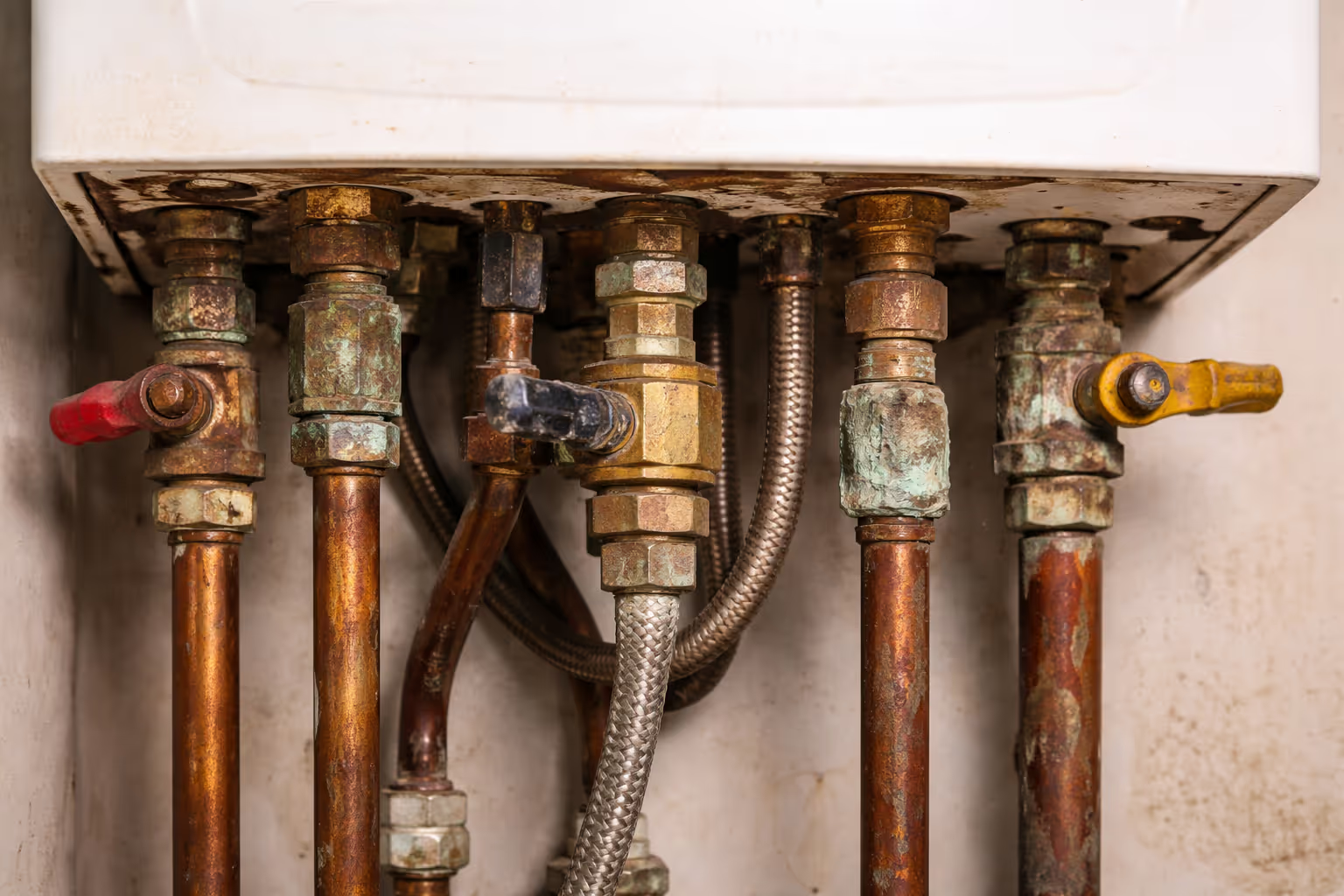
As a quick checklist, here are some things to consider when deciding when to replace your boiler:
You can check out replacement costs for your unit using our boiler pricing page here.
Or, carry on reading our detailed guide to determine how often you should replace your boiler.
How long do boilers last?
If you're trying to determine when to replace your boiler, the first thing you need to know is how long boilers last.
A typical "useful" lifespan of a boiler sits in the region of 10-15 years. We say "useful", because the life expectancy of many boilers is actually a lot longer than this.
For boilers that have been repaired over and over, they could last over 20 years. However, that's not to say keeping it is the most cost effective solution.
Over a 20-year lifespan it’s likely a boiler will need multiple repairs, some costing upwards of £500 each (see our table below). Alongside this, they’re inefficient compared to new models so cost £100+ per year more in gas to run.
Of course, there are a range of factors that affect exactly how often you’ll need to replace your boiler including:
Whilst a boiler could last upwards of 20-years, you should generally look to swap your boiler in the 10-15 year range (it’s “useful” lifespan) to get the best balance of cost, efficiency and reliability.
Repair vs boiler replacement cost
To determine exactly when you should replace your boiler, you’ll need to compare repair vs replacement costs, which is exactly what we’ve done below (in detail).
You’ll generally want to replace your boiler at the point where it’s costing you in excess of £300+ per year in repair bills. At this point, the cost effective solution is to get a newer (more efficient) unit that's covered by a 5-10 year warranty.
Repair costs
Boiler repairs certainly aren't cheap. Depending on the component that failed and the time taken on the diagnostic, expect costs to be in the region of £200-£600.
This would be for major component replacements such as the: burner, gas valve, diverter valve, heat exchanger and PCB.
If you have a boiler that has a long warranty, a failure will be covered by the manufacturer.
Boiler out of warranty and parts are starting to fail? It's worth taking some time to decide whether investing up to £600 in repairs on an old boiler is really worth it.
Here are some common boiler components that fail and some estimations on the potential repair cost:
Replacement cost
Now you know you’re likely to be paying £300 or more to repair an old boiler, how much is a replacement likely to cost?
When fitting a new boiler, a like-for-like swap is the cheapest option. So, if you have a combi installed, having a new combi boiler fitted will be much cheaper than changing your heating over to a system or heat only boiler.
Replacement prices for a new combi boiler tend to be in the region of £2,250-£3,500.
Down at the low end (£2,250), that's going to be a basic combi boiler swap, using:
- Existing flue and condensate pipe position
- No upgrades to radiators
- Reusing current heating controls
Essentially, using the existing heating setup and simply swapping over the old boiler for a new one.
If you’re upgrading a system/regular boiler, need additional radiators or new heating controls, the cost of replacing your boiler spikes quickly.
The good news?
The above references “typical” prices. We’re competitive, with installations starting below £2,000 for smaller properties.
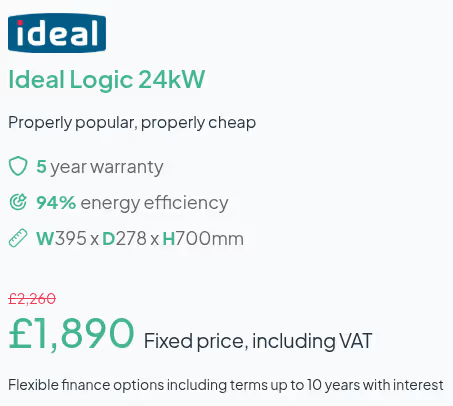
And as part of replacing your boiler, we'll include:
We’ve written a big guide covering average prices for a boiler change here. Alternatively, get prices on-screen for a boiler that’s perfect for your property using our boiler quote page here.
Key signs it’s time to replace your boiler
- 10-years old or out of warranty
If there's any time to plan to replace your boiler, it's when its warranty is due to expire.
Most manufacturers offer a parts and labour warranty, confident that during this period their boiler will cost nothing (or very little) to fix. And, that's why we love boilers with a long warranty.
If you have a boiler that's coming out of warranty, you'll be the one left footing the bill, on an old boiler that's likely to fail.
Whilst it's not essential you replace it right away, it's worth planning for, ready for when a crucial part fails; the PCB for instance could cost £500+ to replace. This money is better spent on a new unit.
Whilst our base units cost under £2,000, we have options for replacement boilers with a 10-year warranty, such as the Worcester Bosch pictured here:
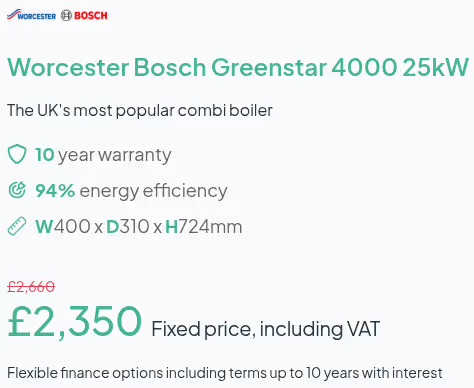
You can get quotes on boilers with a 5-12 year warranty here. Alternatively, contact our boiler experts to determine the best unit offering the most suitable balance of price and warranty for your property.
Or, jump over to our guide covering the best combi boilers here.
- Increasing repair bills
Boiler already out of warranty? This doesn’t always mean you need a replacement straight away, but annual repair bills are something to watch.
Boiler repairs are rarely under £300, and can be £500 on many occasions. If you’re replacing parts in the £300-£500 range nearing every year, it’s likely you’d be better simply buying a new boiler.
Why? Because in 5 years, replacing a £300-£500 part per year will cost you £1,500-£2,500.
We fit boilers that:
- Start as low as £1,890 (less than 5 years worth of repairs)
- Covered with a minimum of a 5-year warranty (you won’t pay for repairs during that time)
- Offer in excess of 90% efficiency (likely a huge gas bill saving in comparison to your old boiler)
- Energy costs are increasing
Deciding when you should replace your boiler for most people generally comes down to warranty and repair costs.
However, the opportunity cost of sticking with your old boiler shouldn’t be overlooked.
If we take a dramatic example (G-rated boiler working at 70% efficiency or lower), it’s likely the average semi-detached property could save around £300 per year. Obviously these are estimates and are property dependant:
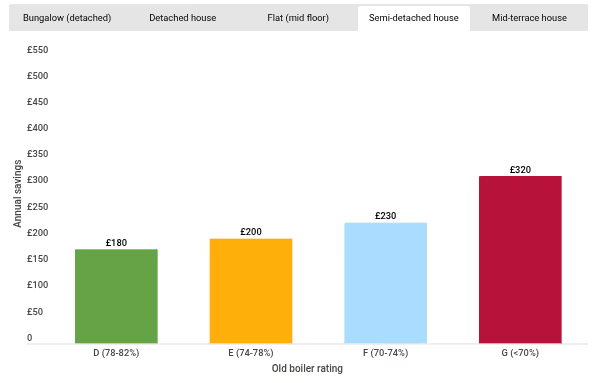
(Source: Energy Saving Trust)
For those with a boiler that’s 15-years old (or older), it’s likely the boiler sits in a C-D rating. So, there’s a good chance it could save you up to £180 per year (this rises to £220 for detached properties).
Put simply, if you bought a boiler with a 10-year warranty, even if it was replaced after the warranty period. you’d have saved up to £1,800 on energy bills.
The initial cost? £2,350 (using our Worcester Bosch example above).
- Corrosion and leaks
Leaks are a common killer of modern boilers. Water not only causes corrosion but also damages electrical components.
If your boiler is leaking, you’ll want to get it fixed as soon as possible. If this is a simple case of replacing a fitting, the repair cost could be sub £200.
However, for failed pumps or cracked heat exchangers that have caused leaks, you could be looking at a £300-£500 repair bill.
Essentially, be on the lookout for signs your boiler is failing and get quotes in place ready for when it does. Otherwise you’ll be paying for an emergency repair; sinking big money into an old and unreliable boiler.
How long does it take to fit a boiler?
Planning ahead is crucial. Not only can you compare installation costs to get the best price in advance, you'll be able to get a boiler to be booked in and fitted before your unit breaks.
Depending on the installer, you may be able to get a fitter out within 5-7 days.
Once booked in, expect a boiler swap (changing a like-for-like unit) to take 1 day. Add on half to a full day if you want your boiler moved to a new location.
Expect this to jump to 2 days for an upgrade (switching from a heat-only to a combi), and 5-10 days if you want a complete installation (boiler, pipework and radiators).
Ready to replace your boiler? Use our boiler pricing tool and get your old boiler replaced as soon as tomorrow.
