

Mitsubishi Ecodan Error and Fault Codes Guide


Thinking about a heat pump?
If you’re wondering whether a heat pump could work in your home, we can give you a quick estimate and talk it through. No jargon, no pressure.
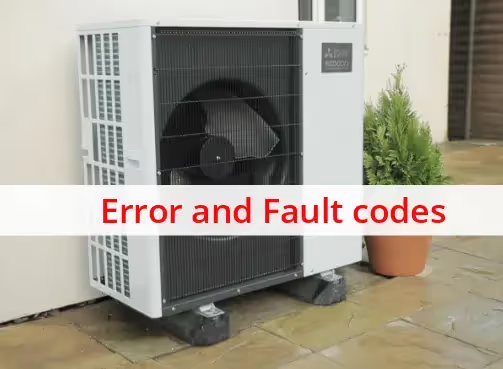
Mitsubishi Ecodan heat pumps are well-known for their energy efficiency and reliability, making them a popular choice of heat pump in the UK. However, like any advanced heating solution, they can encounter issues from time to time, which are indicated by specific error or fault codes. If you are reading this article then you are likely already the proud owner of an Ecodan, but you might find our review of the Ecodan interesting if you would like a different opinion on the choice of unit.
In this guide, we’ll walk you through the most common Mitsubishi Ecodan fault codes, what each one means, and give you some step-by-step troubleshooting advice. Whether you're dealing with a water circulation issue, thermistor failure, or communication error, this article will help you quickly identify the problem. You will note that the resolution is not always straightforward, so some of you might have the experience and knowhow to resolve some of the issues yourself, while in other cases it might be best to seek professional help.
What Are Mitsubishi Ecodan Error Messages?
Mitsubishi Ecodan heat pumps use diagnostic error codes to indicate faults and issues with the unit or system. These codes are displayed on the controller panel, helping homeowners and technicians pinpoint the root cause of the issues quickly and efficiently.
Some fault codes can be resolved with simple troubleshooting, while others may require professional servicing.
Common Mitsubishi Ecodan Fault Codes Explained
Here are some of the most frequently encountered Mitsubishi Ecodan fault codes, their meanings, and suggested actions:
F3 - Low Pressure Switch Failure: Check the connection on the board and verify the continuity of the switch.
F5 - High Pressure Switch Failure: Inspect the connection on the board and ensure proper switch operation.
L3 - Circulation Water Temperature Overheat Protection: Check for water leakage, strainer blockage, and ensure the circulation pump is functioning correctly.
L9 - Low Primary Circuit Flow Rate Detected: Inspect for water leakage, strainer blockage, and replace the flow switch if necessary.
U1 - High Pressure Fault: Check water flow rates and ensure no blockages.
U6 - Inverter/Compressor Overcurrent: Perform diagnostic tests on the inverter and compressor.
E0 - Transmitting Error (PAR-W21): Verify and correct refrigerant address settings on SW1.
E6 - Indoor/Outdoor Communication Error: Ensure proper power-up sequence and inspect communication lines.
For a full list of fault codes, meanings, and actions, refer to the detailed table below.
How to Troubleshoot Mitsubishi Ecodan Faults
Why Is My Mitsubishi Ecodan Heat Pump Not Working?
Several common factors can cause your Mitsubishi Ecodan heat pump to malfunction:
Low Water Pressure: Ensure the system has adequate water pressure.
Sensor Faults: Thermistors or temperature sensors may fail or become disconnected.
Communication Errors: Damaged cables or loose connections can disrupt communication between the controller and the outdoor unit.
Blocked Strainer or Pipes: Debris or airlocks can reduce water circulation.
When to Call a Professional

While some Mitsubishi Ecodan error codes can be resolved with simple DIY steps, critical faults such as U6 (Inverter/Compressor Overcurrent) or E6 (Indoor/Outdoor Communication Error) should be addressed by an experienced heating engineer. Check your warranty, as the manufacturer should be your first port of call.
If you're unsure about the cause of a fault code, it’s always safer to seek professional assistance.
Proactive Maintenance Tips for Mitsubishi Ecodan Heat Pumps
Preventive maintenance can help reduce fault occurrences and extend the lifespan of your Mitsubishi Ecodan heat pump:
Frequently Asked Questions (FAQs)
Conclusion
Understanding the Mitsubishi Ecodan error codes, and the fault codes, can save you time and reduce costly repairs. Identifying the issue will help you determine whether it is something you can fix yourself, or if you need professional help. If the unit is quite old, outside of the warranty and it starting to have faults more regularly then try our online quote tool to find a suitable replacement. Replacing an existing heat pump is much easier and cheaper than the initial install. Arrange a call with our team to discuss the process of replacing a heat pump.
For ongoing reliability, regular maintenance and professional inspections are essential.
Bookmark this guide for easy troubleshooting or share it with other Mitsubishi Ecodan owners!
