

Can using your heat pump for cooling cause damp and mould?

Thinking about a heat pump?
If you’re wondering whether a heat pump could work in your home, we can give you a quick estimate and talk it through. No jargon, no pressure.
After a summer of hot weather, you might have discovered something you didn’t realise your heat pump could do: cool your home as well as heat it.
Many air-to-water heat pumps are technically capable of running in reverse, producing chilled water instead of hot water. So when temperatures climb, switching your heat pump into cooling mode can seem like an obvious solution.
But there’s an important catch.
Just because your heat pump can produce chilled water doesn’t necessarily mean the rest of your heating system has been designed to handle it safely.
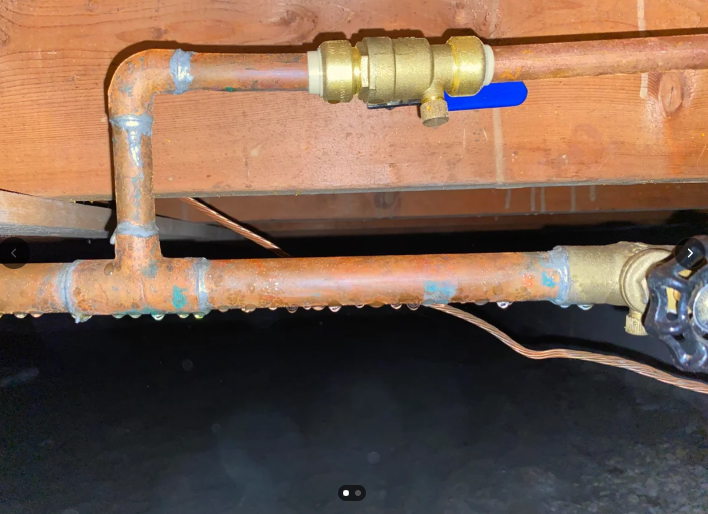
And if it hasn’t, using your heat pump for cooling could potentially lead to condensation forming around pipes, including beneath floors and behind walls where you can’t see it.
As we move into autumn, here’s what homeowners who used heat pump cooling this summer need to know.
Why can heat pump cooling cause condensation?
The issue isn’t usually the heat pump itself. It’s what happens when chilled water is circulated through a heating system that was originally designed to carry hot water.
Most British wet central heating systems have radiators, pipes and insulation designed specifically for heating.
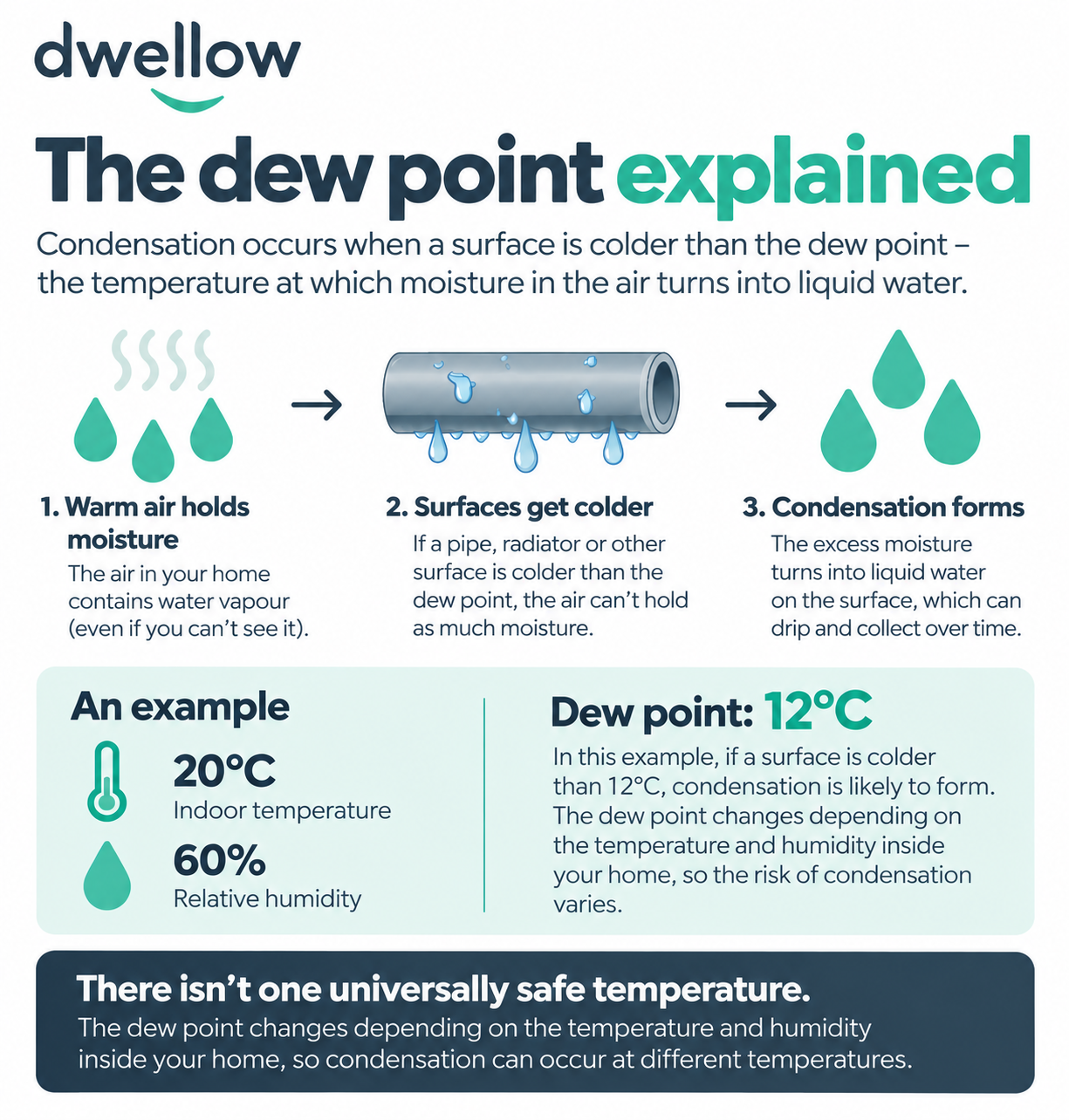
When cold water is sent through those pipes, their surface temperature can fall below what’s known as the dew point.
The dew point is the temperature at which moisture in the surrounding air starts to condense into liquid water - much like the droplets that appear on the outside of a cold drink on a warm day.
If that happens on heating pipes, moisture can form on their surface.
The problem is that much of your home's pipework may be hidden beneath floors, inside walls or behind plasterboard.
So you might not even know condensation is occurring.
Could this lead to damp or mould?
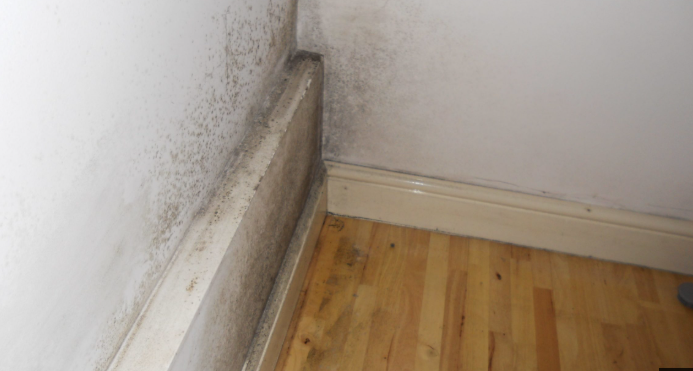
Potentially, yes.
Occasional condensation somewhere that can quickly dry out may not cause a problem. But repeated moisture forming in an enclosed space can be more concerning.
Over time, persistent moisture could contribute to issues such as damp, mould, damaged flooring or deterioration of surrounding materials.
That means problems caused during summer cooling may not necessarily become obvious until later.
Ian McLaren, Co-Founder of Dwellow, explains: “After the hot weather we've had this summer, it's completely understandable that homeowners have looked for a cooling setting or add-on for their heat pump and thought: why not use it?
“The issue isn't necessarily the heat pump itself. Many can produce chilled water perfectly well. The problem is whether the rest of the heating system has been designed to carry that chilled water safely.
“If pipes become cold enough, moisture in the air can condense on them. If that happens repeatedly beneath a floor or behind plasterboard, you may not see any obvious sign at the time.
“It's only later that problems such as damp, damaged flooring or mould could potentially become apparent.”
What temperature causes condensation?
There isn’t one universally safe temperature because the dew point changes according to the temperature and humidity inside your home.
As a rough example, circulating water may need to remain at around 16°C or above in some conditions to reduce the risk of condensation.
But there’s a trade-off.
The warmer you keep the circulating water, the less effective it becomes at cooling your home.
That can make conventional radiators a particularly imperfect solution.
Can you cool your home using normal radiators?
Technically, you may be able to circulate cooler water through radiators. But that doesn't necessarily mean they'll cool your home particularly effectively.
Traditional radiators have been designed to do the opposite job.
When a radiator is hot, it heats the surrounding air. That warm air rises and circulates through the room.
Cold air, however, sinks.
Adam Raw, Dwellow Co-Founder, explains: “You're asking a radiator designed to heat a room with hot water to cool it using relatively mildly chilled water.
“For many existing homes, you can therefore end up with relatively limited cooling while introducing a condensation risk that wasn't there when the system was being used for heating.”
In other words, you could potentially introduce additional risk without achieving anything close to the cooling effect you'd expect from air conditioning.
What about underfloor heating?
Underfloor heating can be better suited to heat pump cooling because it provides a much larger surface area than conventional radiators.
But that doesn't mean you can simply start pumping cold water through your floors.
The system still needs suitable controls and dew-point protection to prevent surfaces and pipes becoming cold enough for condensation to form.
Because there is little air movement, underfloor cooling also feels different from air conditioning.
Purpose-designed fan coil units can provide more effective cooling, but by the time you're replacing emitters, adding fans, improving pipe insulation and installing additional controls, it's worth comparing the cost with a dedicated cooling system.
Why humidity matters
One of the complications with heat pump cooling is that the conditions inside your home constantly change.
A water temperature that is safe at one point in the day may not necessarily be safe later if humidity increases.
Bathrooms, kitchens and other humid areas can also have very different conditions from the room containing your thermostat or humidity sensor.
That's why simply choosing a seemingly “safe” cooling temperature isn't necessarily enough.
Modern heat pumps and control systems can include humidity monitoring and dew-point protection, but the whole system needs to have been designed with cooling in mind.
How do I know if my heat pump system is suitable for cooling?
The key distinction is between a heat pump that is capable of producing chilled water and a home heating system that has been designed to use chilled water safely.
A properly designed heating and cooling system might include:
- Vapour-resistant insulation around suitable pipework
- Dew-point protection
- Humidity monitoring
- Appropriate controls
- Emitters designed to provide effective cooling
- Correctly designed underfloor cooling or fan coil units
Seeing a cooling symbol or setting on your heat pump doesn't confirm that all of these things are in place.
Adam says: “Customers regularly ask whether their heat pump can cool their home. Technically, it may be able to, but that doesn't automatically mean the heating system connected to it is suitable for cooling.
“If cooling has been designed into the system from the beginning, that's different. Homeowners shouldn't assume that seeing a cooling option on their heat pump means their home is cooling-ready.”
I used my heat pump for cooling this summer. What should I do?
There’s no need to assume that using cooling means you've caused a problem.
But if you made significant use of your heat pump's cooling function this summer, it's worth checking whether your system was actually designed for it.
Speak to your heat pump installer and ask whether your system has appropriate condensation and dew-point protection, and whether your pipework and emitters are suitable for cooling.
You can also keep an eye out for unusual signs of moisture, damp, mould or changes to flooring around areas where heating pipes run.
Most importantly, don't assume that because your heat pump allows you to select cooling, your entire heating system is automatically cooling-ready.
Should I use my heat pump for cooling next summer?
If your home became unbearably hot this summer, autumn and winter are actually a good time to think about how you want to tackle overheating next year.
Air-to-water heat pumps absolutely can provide heating and cooling when the entire system has been designed to do so.
But if your main aim is powerful cooling during hot weather, it may be worth comparing the cost of adapting your wet heating system with a purpose-designed air-conditioning system, which is itself essentially an air-to-air heat pump.
Ian adds: “Heat pumps are brilliant at efficiently heating homes, and they absolutely can provide cooling when the system has been designed to do it properly.
“But an air-to-water heat pump isn't automatically an air-conditioning system.
“If this summer has made you think seriously about cooling your home in future, now is the time to look at the options rather than waiting for the next heatwave and simply pressing the cooling button.”
The bottom line
A heat pump having a cooling function doesn't necessarily mean your home is designed for heat pump cooling.
Before using it, make sure your pipework, insulation, emitters and controls are suitable for chilled water and that appropriate dew-point protection is in place.
Done properly, a heat pump can provide both heating and cooling. But simply switching a conventional wet central heating system from hot to cold isn't quite as straightforward as pressing a button.
Thinking about getting a heat pump? Get a free estimate in two minutes.
Got a question about heat pumps? Give us a call or check out our guides.
Alternatively, watch one of our instructional videos on YouTube.
