

How Does a Heat Pump Work?


Thinking about a heat pump?
If you’re wondering whether a heat pump could work in your home, we can give you a quick estimate and talk it through. No jargon, no pressure.
Most British households have been used to burning fossil fuels, like gas, oil or coal, for decades to generate heat to warm their homes. Heat pumps, whether air source or ground source, do things differently.
Almost all of us have a heat pump in our home today - and have done for many years. Know what it is? It's a fridge. The heat pump in a fridge moves warm air out of the fridge into the room, keeping your fridge cold. That's why the air at the back of a fridge (or freezer) feels warm. When using a heat pump to heat your home, you're moving heat from the outside, into your home.
But how does this work on a chilly day? The key is a special fluid called refrigerant. This boosts the low heat levels in the air or ground to a temperature warm enough to heat our homes. Let's understand how this work in simple terms...
The heat pump cycle
The first thing to know is that this happens in a continuous cycle. If you remember the water evaporation cycle from school, it's a bit like that.
STEP 1: Absorbing Heat from the Air
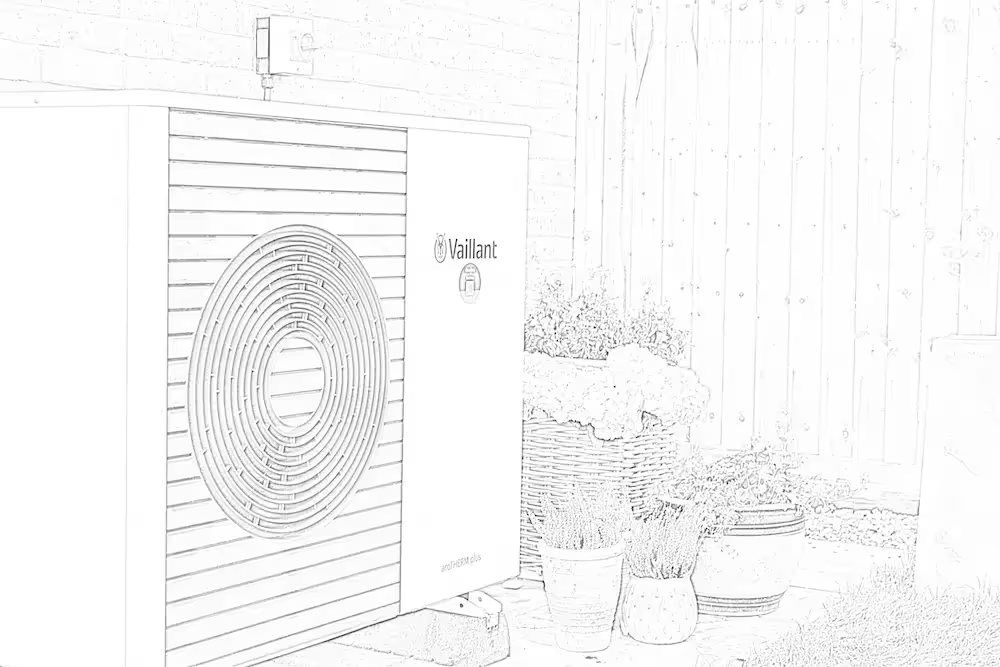
Outside your home we'll place a rectangular unit, about the size of a small chest of drawers. This unit pulls in air using a large fan - the bit that uses most of the electricity. This air passes over coils (an evaporator), behind the fan, containing our special liquid (refrigerant), which absorbs heat even when the air feels cold to us. As the air heats the refrigerant it evaporates (it has a much lower boiling temperature than water).
STEP 2: Compressing the Heat
The now-warm refrigerant (which is now a gas) gets compressed to increase its temperature even more. Think of how a bike pump gets warm when you use it—the same idea applies here.
STEP 3: Transferring Heat to Water
The hot refrigerant passes its heat to water through what's called a heat exchanger. You also have heat exchangers in your home today! We call them radiators - in this case, the heat in the water circulating around your radiators is transferred to your room. In a heat pump, the heat in the hot refrigerant is transferred to the water in your central heating system through a heat exchanger in the heat pump. This now hot water (about 50 degrees Celsius) is pumped through your home through your existing central heating system and heats hot water in a hot water cylinder.
STEP 4: Cooling down and starting again
As the refrigerant transfers its heat to the water in your central heating system, it cools down, turns back to a liquid, and returns to the coils behind the fan to pick up more heat. The cycle starts over.
Key Things to Remember
- Effective in Cold Weather: Even on chilly days, air source heat pumps can extract heat from the air to warm your home
- No need for fossil fuels: This system uses electricity and smart technology - no gas or oil required
- Dual purpose: It heats both your home and your hot water, just like your boiler does today, and it can reuse most of your existing central heating
Why It’s Efficient
Unlike traditional systems that burn fuel, air-to-water heat pumps use existing heat from the environment. By moving heat rather than creating it, these pumps are highly energy efficient and environmentally friendly.
If you'd like to understand how a heat pump could work in your home, our friendly team is ready to take your call at 0330 822 2795. You can also get a free personalised quote in under two minutes.
