

The new Vaillant aroTHERM Plus heat pump - expert review
.jpg)


Thinking about a heat pump?
If you’re wondering whether a heat pump could work in your home, we can give you a quick estimate and talk it through. No jargon, no pressure.
When Vaillant launched the original aroTHERM Plus heat pump in 2020, it was one of the first mainstream air source heat pumps to use natural refrigerant R290. At a time when most manufacturers were still relying on synthetic refrigerants, Vaillant's decision looked bold. Five years on, the aroTHERM Plus has become one of the UK's most popular premium heat pumps, particularly in the retrofit market.
Now, as the number of heat pumps installed in the UK continues to climb rapidly, engineers at the German firm have launched an updated Plus. Despite the cosmetic change from white to anthracite, there are several significant changes aimed at solving some of the practical challenges installers face when fitting heat pumps to existing homes.
If you prefer to watch a video, we've filmed a recent install of the new aroTHERM Plus where we cover the three biggest improvements in the new model:
The biggest change: easier siting
The standout feature of the new aroTHERM Plus is Vaillant's Flexible Space Function (FSF).
To understand why this is significant, it's worth looking at one of the key challenges faced by all heat pumps that use R290 refrigerant.
R290, commonly known as propane, is a natural refrigerant with an exceptionally low global warming potential. It's one of the main reasons the original aroTHERM Plus became so popular. However, because propane is flammable, heat pumps using R290 require a safety protection zone around the outdoor unit. This area, known as an exclusion zone, ensures that refrigerant can disperse safely in the extremely unlikely event of a leak.
Traditionally, these exclusion zones can restrict where a heat pump can be installed. Windows, doors, external sockets and other potential ignition sources may affect siting options, while some manufacturers also impose restrictions around drains, air bricks and other building features.

Vaillant's new Flexible Space Function is designed to dramatically reduce this exclusion zone to just 100 mm from the unit itself, giving installers far greater freedom when positioning the heat pump. In the unlikely event of a refrigerant leak, the system automatically activates the fan to disperse the refrigerant safely away from the unit, allowing the protection zone to be significantly reduced.
As a result, items such as rotary isolator switches, electricity meters, plug sockets, windows, doors and other building openings that would currently fall within an exclusion zone can generally be located much closer to the new aroTHERM Plus.
For example, the rotary isolator shown in the image below has been installed closer to the outdoor unit than current guidance permits - a relatively common installation error that would typically require rectification on many existing R290 heat pumps. Under Vaillant's new FSF arrangement, however, this installation would be compliant.
In practical terms, this opens up far more installation possibilities, particularly for the types of properties commonly found across the UK. Terraced homes, narrow side passages and properties with compact gardens can often present challenges for heat pump installations, but the reduced protection zone means the new aroTHERM Plus can be fitted in locations that may previously have been difficult, or even impossible, to accommodate.

It’s quieter than ever
Heat pump noise remains one of the most common concerns raised by homeowners. In reality, modern heat pumps are already far quieter than many people expect, often producing sound levels comparable to everyday household appliances, such as a fridge. However, Vaillant has continued to refine performance in this area.
The new aroTHERM Plus is now the quietest air-to-water heat pump in Vaillant's range, with sound power levels starting from just 44 dB(A), depending on the model size. That's an impressively low figure for a system capable of heating an entire home.
To appreciate the improvement, it's worth comparing it with the original aroTHERM Plus, which had sound power levels as low as 54 dB(A). While a 10 dB reduction might not sound significant on paper, the decibel scale is logarithmic, meaning a 10 dB decrease is generally perceived by the human ear as around half as loud. In practical terms, a heat pump operating at 44 dB(A) is comparable to a quiet library or a peaceful suburban street, while 54 dB(A) is more akin to the ambient sound of a normal conversation at home.

Of course, noise levels vary depending on the model size and operating conditions. Like all heat pumps, the aroTHERM Plus will work harder during colder weather, meaning sound levels can increase slightly on the coldest winter days when heating demand is highest. However, this is also the time of year when people are typically spending less time outdoors, and modern heat pumps remain remarkably quiet compared with many other outdoor appliances.
To put the new aroTHERM Plus into context, a mid-sized 7kW model has a sound power level of just 46.8 dB(A) under standard test conditions (55°C flow temperature and 7°C outdoor temperature). This means it can be installed less than two metres from a neighbouring habitable window while still meeting noise assessment requirements. Where a solid fence or wall separates the heat pump from the neighbouring property, compliance becomes even easier to achieve.
For homeowners, quieter operation can simplify the planning and design process, provide greater flexibility over where the unit is installed, and help alleviate concerns about noise for both occupants and neighbours. Combined with the new Flexible Space Function, it makes the latest aroTHERM Plus one of the easiest heat pumps to accommodate in a typical UK home.
A new anthracite look
Aesthetics might not seem important when discussing heating systems, but they matter more than many manufacturers acknowledge, especially with homeowners expecting to own them for 20 years or more.
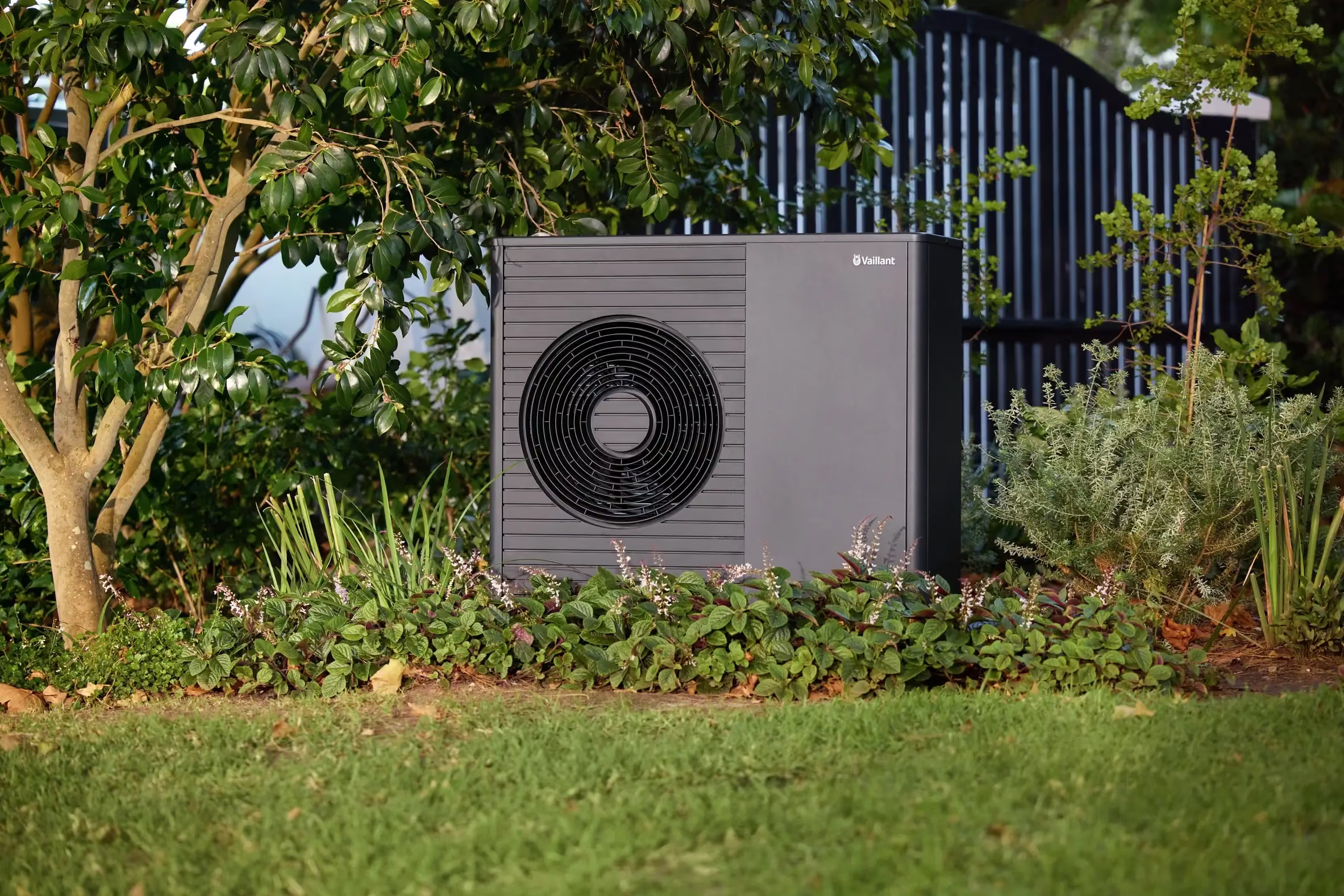
The original aroTHERM Plus already had a reputation for being one of the better-looking heat pumps on the market. The updated model retains the same clean, modern appearance but introduces a new anthracite finish that feels noticeably more premium.
For many homeowners, particularly those investing significant sums in a heating upgrade, appearance is an increasingly important part of the purchasing decision.
The darker charcoal finish helps the unit blend more naturally against modern brickwork, cladding and contemporary landscaping.
High temperatures without compromise
One of the features that helped the original aroTHERM Plus stand out was its ability to deliver high flow temperatures while using the natural refrigerant R290, and that capability remains unchanged in the latest model.
The new aroTHERM Plus can achieve flow temperatures of up to 75°C, although, as with any heat pump, the goal is still to operate at lower flow temperatures wherever possible to maximise efficiency and reduce running costs.
That high-temperature capability can, however, offer greater flexibility in retrofit projects. In some cases, it may allow the heat pump to work with an existing hot water cylinder that has a smaller heat exchanger and was not originally designed for use with a heat pump. It also enables the system to carry out its legionella protection cycle without relying on an immersion heater, helping to maintain efficiency while ensuring hot water hygiene standards are met.
Environmentally friendly refrigerant
The continued use of R290 remains one of the aroTHERM Plus's strongest selling points.
Unlike many synthetic refrigerants, R290 has an extremely low global warming potential. As environmental regulations tighten and refrigerants come under greater scrutiny, the choice of refrigerant is becoming increasingly important.
For homeowners, this may not affect day-to-day operation, but it does offer reassurance that the system is built around a refrigerant likely to remain viable long into the future.

Better support and longer warranties
Vaillant is offering up to a seven-year guarantee on the new aroTHERM Plus when installed alongside a Vaillant cylinder and registered through its installer programme.
While warranties should never be the sole basis for choosing a heat pump, they do provide an indication of manufacturer confidence and can offer valuable peace of mind for homeowners making a long-term investment.
The verdict
The updated aroTHERM Plus is not a radical reinvention of the original. Instead, Vaillant has taken an already highly regarded heat pump and refined it in ways that address some of the biggest real-world challenges facing installers and homeowners alike.
The headline improvement is undoubtedly the new Flexible Space Function (FSF). While the quieter operation, anthracite finish and enhanced controls are all welcome additions, it's the dramatically reduced protection zone that has the potential to be truly game-changing for the UK heat pump market.
One of the biggest obstacles to heat pump adoption has never been the technology itself, but finding a suitable place to install it. Many UK homes, particularly terraced properties, homes with narrow side access, compact gardens or limited outdoor space, can present challenges when it comes to meeting siting requirements for R290 heat pumps.

By reducing the protection zone to just 100mm, Vaillant has opened up installation possibilities for a far wider range of properties. For many homeowners, this could be the difference between a heat pump being ruled out at the survey stage and becoming a viable heating solution.
As heat pumps move beyond straightforward installations and into the millions of homes that make up the UK's existing housing stock, flexibility will become increasingly important. In that context, the Flexible Space Function may prove to be far more significant than any cosmetic update or performance enhancement. It has the potential to remove one of the most practical barriers to heat pump adoption and make low-carbon heating accessible to many more households.
For homeowners considering a heat pump in 2026, the new aroTHERM Plus feels less like a revolution and more like the next step in the evolution of a product that was already helping to set the standard. Yet with the introduction of FSF, it may also have taken one of the biggest strides yet towards making heat pumps a realistic option for almost every type of UK home.
