

£9,000 heat pump grant: Why oil heated homes should act now

Thinking about a heat pump?
If you’re wondering whether a heat pump could work in your home, we can give you a quick estimate and talk it through. No jargon, no pressure.
In April 2026, the UK government announced a series of changes aimed at reducing the influence of gas on electricity prices and accelerating the shift to low-carbon heating. While the headlines focus on the energy system as a whole, one group stands to benefit more directly than most: households currently heating their homes with oil.
If you’re relying on oil and you’re considering switching to a heat pump, these changes are designed with you in mind.
Read on for everything you need to know about the expanded government grant.
Why are oil customers being helped?
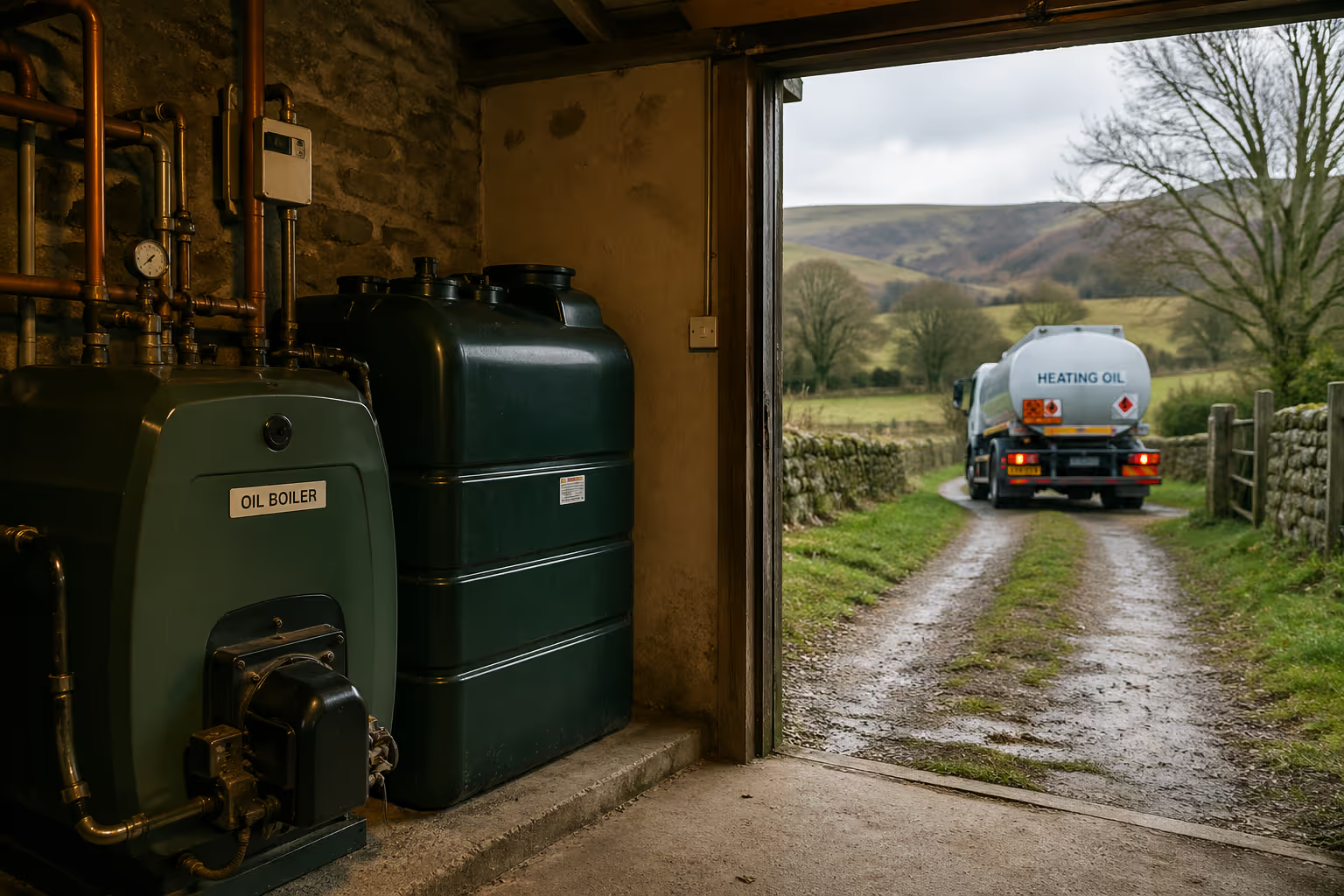
Oil-heated homes are typically found in rural areas, where access to the gas grid isn’t available. These households often face some of the highest and most unpredictable heating costs, with prices rising and falling depending on global oil markets. At the same time, oil is one of the more carbon-intensive ways to heat a home.
For the government, supporting oil households to switch to heat pumps not only reduces emissions, but also helps insulate these homes from volatile fuel prices. In that sense, oil users are both among the most exposed, and the most likely to benefit from change.
Approximately 1.5 million households in Britain that are not connected to the gas grid rely on oil for their heating.
Why is oil so expensive?
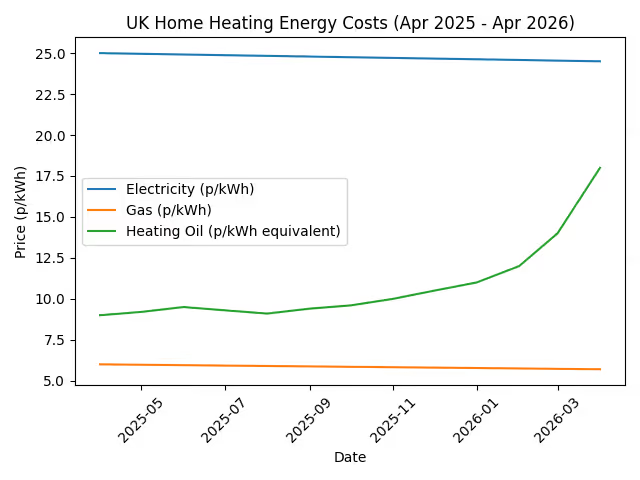
The price of heating oil is currently at unprecedented levels due to the ongoing crisis in the Middle East and the blockade of the Strait of Hormuz, meaning many homeowners are now paying more than £1 per litre instead of 60p.
Heating oil is also not covered by the Ofgem energy price cap which protects gas boiler users.
Generally speaking, heating your home on oil is inconvenient, costly, and unpredictable. Oil tanks take up space and are often a target for theft.
How is the UK government helping?
The government announced in April 2026 that it will increase grants available under the ‘Boiler Upgrade Scheme’ (BUS) from £7,500 to £9,000 for properties in England and Wales that rely on heating oil and LPG (Liquefied Petroleum Gas). This initiative aims to entice homeowners to switch to electric-powered heat pumps, giving them more stability over their energy bills and a greener, more future-proof heating system. The money can be used towards the cost of installing either a ground-source or air-source heat pump.
A typical heat pump installation excluding the government grant, is around £12,000 - £13,000, so savings are significant.
Dwellow founder Ian McLaren said now is a great time to switch to a heat pump if you’re on oil. “There’s unlikely to be a grant as generous as again, especially if there’s a change in government, so it makes sense to switch now to get the cheapest possible price”.
Check your BUS grant eligibility here.
Do I have to stump up the money upfront?
No. The £9,000 grant is paid directly to your installer (who must be MCS accredited and registered under the Boiler Upgrade Scheme, which Dwellow is). This is then deducted from your final bill, reducing your upfront costs.
The situation is different in Scotland. Funding for a new heat pump is available, but this is currently capped at £7,500, although certain homes in rural areas can qualify for an extra £1,500. Homeowners must apply for the funding themselves, installers cannot apply on their behalf. Scottish families can also benefit from an optional interest-free loan if the grant doesn’t cover the full cost. There’s also an additional 0% VAT on heat pumps until March 31 2027.
There are no funding schemes for heat pumps currently available in Northern Ireland.
When will the grant be available?
The enhanced heat pump grant for oil homeowners in England and Wales is expected to come into force this summer - around July time.
Do heat pumps work in rural areas?
Yes, and rural homes are usually particularly well suited to them. Properties off the gas grid often have more space for outdoor units and are already used to independent heating systems.
Heat pumps are widely used across Europe in similar settings, and in the UK they are increasingly common in countryside and village homes. For many households, they offer a simpler, more self-contained alternative to oil, without the need for fuel storage, deliveries or risk of theft.
McLaren explains “What matters most is how the system is designed and installed. When done properly, with an expert design and heat loss calculations, a heat pump can provide steady, consistent heating that feels different from a traditional gas or oil boiler, no matter what type of home they’re heating”.
Are there any challenges to be aware of?
Heat pump installation in rural areas isn’t without its challenges. A heat pump requires a good electrical capacity due to the significant electrical load it adds to a property, particularly during cold weather. Some rural areas have limited capacity connections and face competing demand from others in the area.
Frost protection may also be needed in parts of the country where temperatures regularly fall below zero.
Homeowners must also budget for the removal of their old oil tank, which must be done by an oil specialist and is likely to cost between £400 and £600, more if the tank is underground.
Will a heat pump be cheaper than oil?
It can be. Generally speaking, electricity is more expensive per kWh than oil, although the electricity prices are more stable. Oil prices are extremely volatile, as we’re seeing currently.
It also depends on your electricity tariff, the seasonal performance of your heat pump, the fabric and insulation of your home and also the heat demand of your property.
On the whole, heat pumps are remarkably efficient, producing 3 to 4 units of heat for every 1 unit of electricity, so it’s a smarter decision in the long term.
McLaren says “Where oil prices are now, it would have to be a really bad heat pump installation with very low efficiency not to be cheaper”.
One of the key aims of the government’s announcement is to re-balance the relationship between gas and electricity prices. At the moment, electricity is relatively expensive because its price is still tied to gas. Over time, the intention is to shift this, making electric heating systems like heat pumps cheaper to run.
Of course, one of the best ways to reduce your heat pump running costs is to install solar panels and a battery system too, which rural homes often have the space for on barn roofs, land and outbuildings. This means homeowners can actively manage their own energy use independently.
%20(1).avif)
What do Dwellow experts think of the changes?
Dwellow founder Adam Raw welcomes the expanded grant as a “positive step”, but says timing is key.
“To have a real impact, this needs to be rolled out quickly so heat pump installations can happen before the autumn. If delivery slips into late summer, many will still face another period relying on oil or LPG.
“Greater support for electrifying heating across Britain is truly welcome, but certainty and speed will determine its effectiveness. Many households will now be wondering whether to act or wait.”
What else did the UK government announce?
The government announced various net zero measures, including plans to build wind turbines and solar panels on brownfield land, industrial sites and railway sites.
It also announced new funding to help build and expand heat pump factories in the UK, creating around 2,000 British jobs. Additional investment will help companies design and test new smaller, cheaper and easier to fit heat pumps.
Furthermore, it plans to make it easier for renters, those living in flats and homes without a driveway to install EV chargers, solar panels and heat pumps.
If you’re considering switching from oil to a heat pump and would like to talk through the options or get a free estimate in just two minutes, see dwellow.co.uk
Read our more in depth guide to switching from oil to a heat pump here.
