

How long do solar panels take to pay for themselves?

Thinking about solar?
Curious what solar panels could save you? Get a quick estimate based on your home, and see if solar makes sense for you.
Solar panel payback period
If you've been toying with the idea of solar panels, there's one burning question you might be very keen to know the answer too. When exactly will they pay for themselves?
It’s a sensible question. After all, installing a mini-power plant on your roof is a significant outlay which sadly no longer comes with quite as many government ‘carrots’ as it did a few years ago. Nobody wants to spend thousands of pounds without understanding what they’ll get in return.
So, if you’re planning on joining Ed Miliband’s growing ‘rooftop revolution’, but you’re not sure when to expect pay-back, read on for a clearer picture.
What's the average solar panel payback period?
Solar panels don't just reduce your electricity bills from day one – they will eventually generate enough savings to cover the entire cost of the installation. The question is how long will that take?
Well, the short answer is 10 - 15 years. Although, many homeowners recover their investment much sooner, with some solar panel systems paying for themselves in as little as 7-12 years.
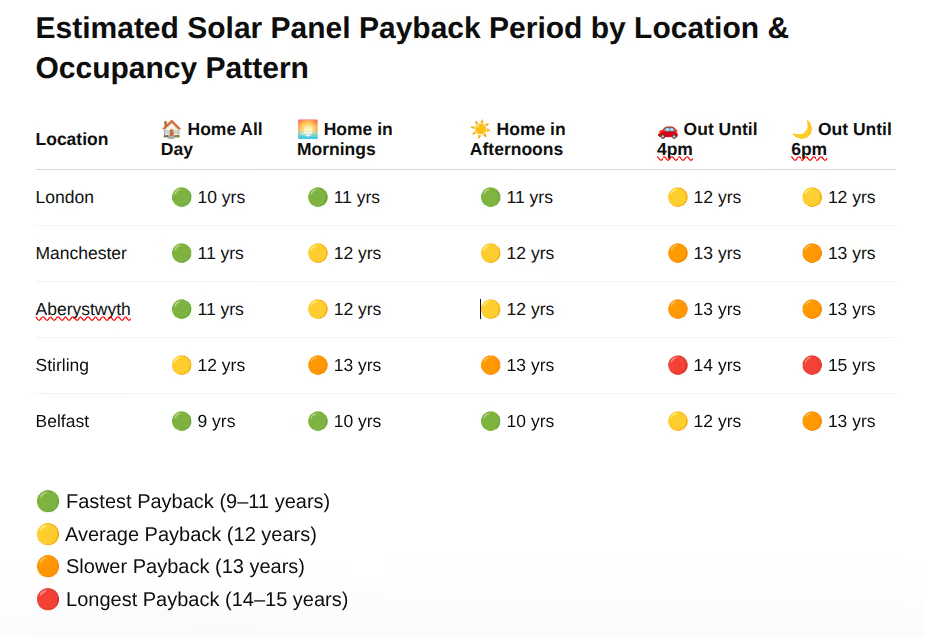
Here’s an example, based on a typical UK home.
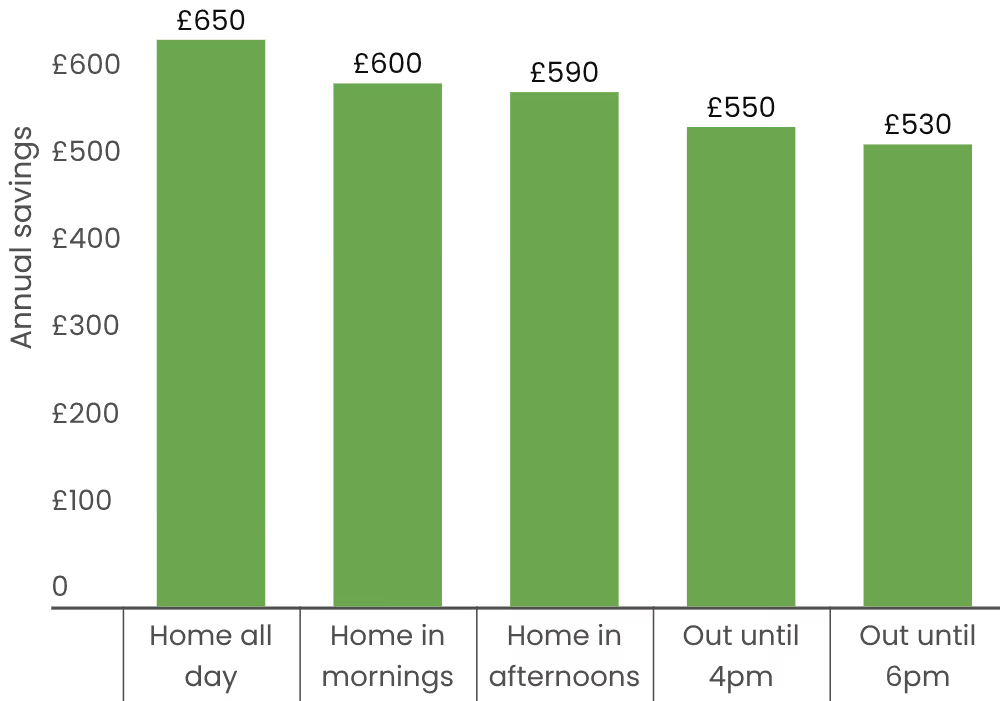
A fairly standard 12 panel, 5.16kW system without a battery will cost as little as £6,000 through Dwellow, saving a typical family of four about £600 per year in electricity.
Assuming they consume roughly 3,600kWh of electricity per annum, it will take about 10 years to pay it back, if the panels are south facing. So, instead of paying £800 per year to an energy company for their electricity, the total cost of electricity from the grid would drop to £600.
They would also save £423 per year by selling excess electricity produced back to the grid via the Smart Export Guarantee (SEG).
Exactly how long your solar panels take to pay for themselves depends on several factors, including:
- The cost of your installation
- Your household's electricity consumption
- Current electricity prices
- The efficiency of your solar panels
- Whether you use the Smart Export Guarantee (SEG)
- Whether you install battery storage
Once your system has paid for itself, every unit of electricity generated is effectively free, helping to reduce your energy bills for many years to come.
If you’re curious about your own home, pop your address into our handy solar quote tool, and it will give you a pretty accurate idea of the system size you'll need, plus estimated pay-back period.
6 factors that affect solar panel payback period
No home or installation is the same, so it’s worth understanding the different factors that can influence the all-important solar pay-back period.
1. Installation Cost
The biggest factor affecting payback is the upfront cost of installation. It’s not rocket science, but lower installation costs result in shorter payback periods.
A typical 3-bedroom property may require a 3.5kWp system consisting of around 10 solar panels, costing approximately £7,000. Larger properties requiring bigger systems can cost significantly more.
The final price will depend on:
- System size (kWp)
- Roof access and installation complexity
- Whether battery storage is included
- Any grants or incentives available
2. How much electricity you use
Solar panels generate electricity during daylight hours. The more solar electricity you can use in real time, the less electricity you'll need to buy from the grid, and the quicker your system will pay for itself.
If you’re working from home, retired or have teenagers constantly plugged into screens and microwaving meals all day, then expect a faster payback.
This is why two seemingly identical homes with the same solar panel system can have very different payback periods. A household consuming 5,000kWh of electricity per year and using much of that energy during daylight hours may recover its investment years sooner than a household using 2,500kWh per year and spending most of the day away from home.
The good news is that there are easy ways to increase your savings. Running washing machines, dishwashers and other high-energy appliances during the daytime, charging electric vehicles when the sun is shining, and using timers or smart controls can all help maximise the amount of solar electricity you use yourself.
Put simply: the more solar electricity you consume within your home, the greater your savings will be, and the shorter your solar panel payback period is likely to be.
3. Electricity prices
Electricity prices play a major role in determining solar panel payback periods.
The more expensive grid electricity becomes, the more valuable every unit of electricity generated by your solar panels is. In effect, you're avoiding buying electricity from your supplier and generating some of it yourself.
While the UK has an energy price cap, this isn't a permanent limit on energy prices. The cap is reviewed every three months and can move up or down depending on wholesale energy costs and wider market conditions.
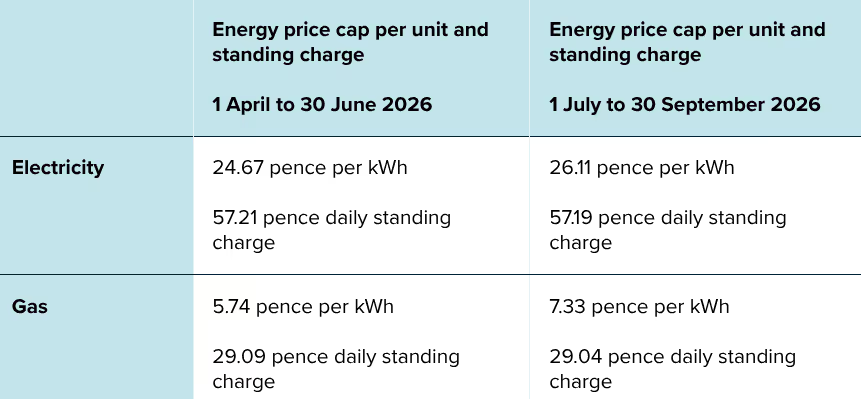
While nobody can predict future energy costs with certainty, long-term trends show that electricity prices generally rise over time. By generating a proportion of your own electricity, you're reducing your reliance on the grid and gaining a degree of protection from future price fluctuations.
As a result, many homeowners find their actual savings differ from the figures originally projected. If electricity prices rise during the lifetime of your system, the value of the electricity you generate is likely to increase too, potentially shortening your solar panel payback period.
4. The efficiency of your solar system
Not all solar panels are created equal.
Modern panels typically range from around 15% to 25% efficiency. Higher-efficiency panels generate more electricity from the same roof space, increasing annual savings and shortening payback periods.
Roof orientation, roof pitch, shading and temperature also affect overall system performance. So if your panels are on an East or West facing slope and they’re partially shaded by a neighbours’ tree, then expect your payback to take a little longer.
5. Smart Export Guarantee (SEG)
More on this below, but if your solar panels generate more electricity than you use, you will be able to sell the excess back to the grid through the Smart Export Guarantee.
SEG payments vary between energy suppliers, but they can provide an additional income stream that helps reduce the overall payback period of your solar panel installation.
6. Battery storage
Solar panels do their heavy lifting during daylight hours (8am - 4pm), so for most working people that solar energy is wasted. However, battery storage allows you to keep all your carefully harvested power and use it in the evening when you really need it.
Yes, they do add a substantial amount to the cost of your solar panel installation, (typically around £5,000), so installing one will definitely prolong your payback period by some years.
However, it’s worth noting that as electricity prices increase, (which they always do over time) battery storage homes will be much better off because they won’t be relying on the grid.
As well as storing excess solar electricity, you can charge them in the small hours when electricity prices are at their lowest, meaning anything you use the following day will cost you barely anything.
Can I earn money from my solar panels?
Yes, but don’t expect to retire early because of your new lucrative second income.
If you produce excess energy that you don’t use, under the Smart Export Guarantee (SEG) that was introduced in 2020, you will be paid for every unit of electricity that you feed back to the national grid. Sounds good, right?
Sadly, SEG is not quite as generous as the Feed-in Tariff (FIT) which ran between 2010 and 2019, which paid you tax free for generating and exporting electricity and locked you into a delightful set rate for 20-25 years, regardless of provider.
How much you’ll be paid under SEG varies greatly, because the tariffs are set by electricity suppliers and are constantly changing. Payments sit anywhere from 5p - 29p per kWh which means the average home will earn about £200 - £300 per year under SEG.
Flex tariffs can differ too depending on the time of day you’re sending electricity back to the grid. In short, if you send it back when the grid really wants it, you’ll be rewarded.
So, whilst this is a way to reduce the payback period of your solar panels, it depends a lot on your tariff and use.
Verdict - are solar panels worth it?
For most households, the answer is absolutely yes, especially with battery storage.
They might burn a hole in your pocket initially, but with average annual savings of around £600 and a typical system lasting 25 years or so, you can expect decades of reduced electricity bills.
Even after your system has paid for itself, you’ll likely benefit from another 10 years of virtually free electricity before the system needs replacing.
Maintenance, replacements and servicing are all generally low too. A well installed system shouldn’t bother you for a good few years.
Calculate your solar panel payback period
Our clickable solar quote tool here will tell you a host of clever things, including what size solar panel system you need, costs, potential savings and payback period. If you’re a solar nerd, you’ll love it.
