

Heat Pumps vs Solar Panels: Which will save you more?



Thinking about solar?
Curious what solar panels could save you? Get a quick estimate based on your home, and see if solar makes sense for you.
Most people are now aware of the benefits of solar panels and heat pumps. Put simply, they both reduce energy bills and cut household carbon footprints. But if budgetary concerns mean you have to think about heat pumps vs solar panels when it comes to making your home more energy efficient, how do you choose between the two?
While it’s impossible to deliver a definitive answer due to the varying energy needs and usage in homes across the UK, we can take a general look at the benefits of a heat pump compared to those of solar panels to figure out where the biggest savings are.
If you’ve already made the decision to reduce your energy bills and your home’s carbon emissions, you can grab a quick quote for solar panels or heat pumps by completing an online form. But if you’re still trying to decide which sustainable energy source is best for your household, keep reading!
The Primary Benefits of Solar Panels
Let’s start our comparison by taking a look at the proven benefits of a heat pump:
The Primary Benefits of a Heat Pump
Savings Possible with Solar Panels
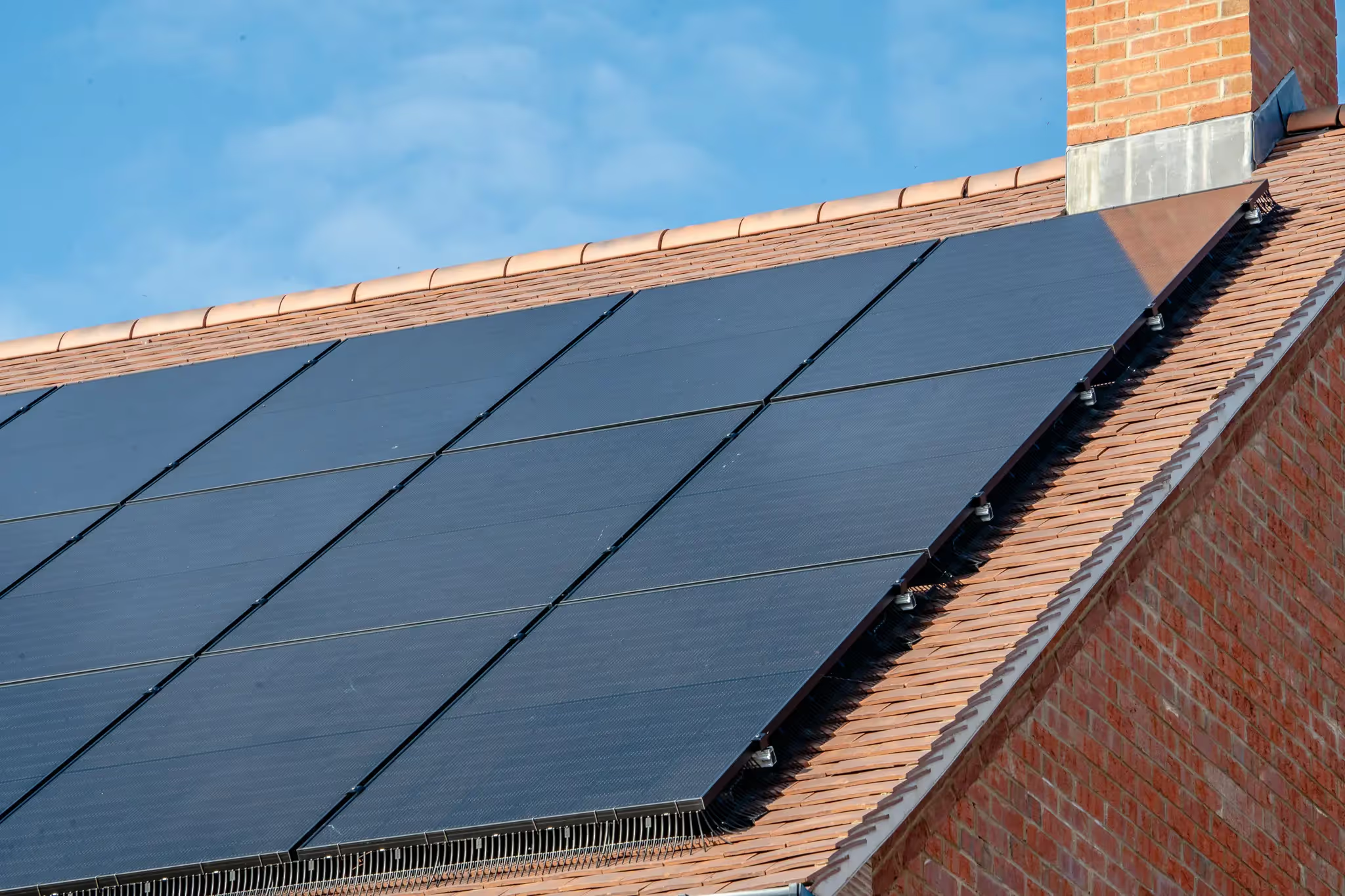
Solar panels drastically reduce your reliance on grid energy. Over the course of the equipment’s lifetime, you can cut the cost of household electricity by several thousand pounds. Moreover, the Smart Export Guarantee could reduce your annual electricity further.. This involves ‘selling’ excess solar electricity your panels generate to the National Grid. You may also be able to reduce the cost of installation by asking your local authority for help or signing up fora group buying initiative.
You can turbocharge your household’s overall fuel and energy savings by combining solar panels with an electric vehicle. Leading energy supplier Octopus says that atypical solar PV system is capable of generating up to four kWh – enough to charge a 40kWh battery of an average EV in just ten hours.
Savings Possible with Heat Pumps
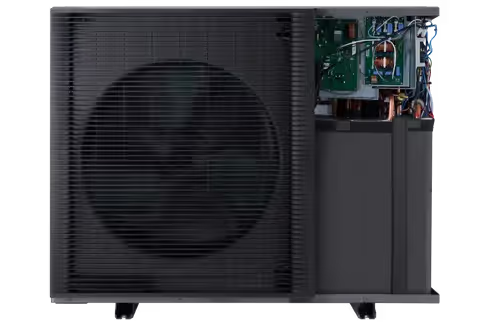
While you might be able to find a small air-source heat pump for as low as £4,000-5,000, the average cost of supply and installation according to the Energy Saving Trust is approximately £14,000.However, with a grant under the UK’s Boiler Upgrade Scheme, you can reduce that price by up to £7,500. But you may need to upgrade your home’s insulation and radiators, which will eat into any savings you secure.
It’s also important to remember that although you won’t need to rely on gas for your heating anymore, you will still need to use electricity to power your heat pump – and that’s still relativelyexpensive. Other issues that affect the overall cost-effectiveness of heat pumps include installation issues and the inability to generate electricity you can sell to the grid.
Heat Pumps vs Solar Panel: The Results
While it’s difficult to predict future savings made possible by solar panels and heat pumps, we can make predictions based on some assumptions.
If you buy a heat pump, you can use the BoilerUpgrade Scheme to save an average of £5,000 on the cost of installation. And while insulating your home more effectively will cost money, it will further reduce your energy bills by preventing needless heat loss. If you were to save around £200 a year on your gas bill, that’s £4,000 over the 20-year lifespan of the average heat pump.
The benefits of solar panels are more numerous and wide-ranging, however. According to MoneyWeek, you may be able to save up to£7,800 with the most efficient solar panel system available. And if you invest in solar battery storage, you can save another £4,500 over the course of the system’s lifetime. That’s £520 per year over 20 years. If you sell excess electricity to the grid, however, you stand to save an incredible £13,500 over the next two decades.
And all of that is before we factor in the savings possible by switching from a petrol car to an EV!
Heat pumps have the benefit of getting gas or oil all but out of your home (there may be some other appliances that still rely on that fuel). This might help future proof you home. It is purely speculative, but if the Government want people to adopt heat pumps at scale they will need to even bring down the levy applied to electricity (applied from the days where huge amounts of coal was burned to produce the electricity);this would help to bring down the running cost of a heat pump.
While both heat pumps and solar panels might provide long-term savings and environmental benefits, winter presents unique challenges for each system. During the colder months, heat pumps can directly impact your heating costs by efficiently warming your home, even at lower outside temperatures and most modern heat pumps offer weather compensation functionality to keep your home comfortable on even the coldest days.With the government grants available, this can be a cost-effective choice to reduce your reliance on gas or oil this winter.
On the other hand, solar panels tend to generate less energy in winter due to shorter daylight hours and lower sunlight intensity. However, if you pair solar panels with a battery storage system, you can still capture and use energy during the day, offsetting electricity costs for other household appliances. The choice between the two depends on your immediate needs: if reducing winter heating bills is your priority, a heat pump may be more effective. But if you're looking for long-term savings on electricity, solar panels with battery storage could be the way to go.
Heat Pumps vs Solar Panels: The Conclusion
Here at Dwellow, we recommend both heat pumps and solar panels for most UK homes. The work really well together, given the heat pump is powered by electricity and the solar panels will generate this for free. Adding a battery can capture the energy to be used when it is needed most, and you can charge the battery using a cheap time of use tariff overnight on the days where there hasn’t been a lot of sun to generate the solar power. However, all these combinations can be expensive, so if you have to choose between them for maximum savings, we believe that solar panels have the edge if your home meets all the criteria for maximum efficiency. However, a heat pump can cost less money upfront due to the £7,500 Government Grant.
Get a quote for solar panel installation today. But if you’ve decided to combine solar power with all the air-source heat pump benefits for maximum savings, you can get a quote for your new heat pump system here.
