Continue reading


)%20(1).PNG)


If your boiler isn’t working, it doesn't necessarily mean it needs replacing.
There are dozens of reasons why a boiler will stop working and below we'll cover the most common faults in detail.
We'll also explain the most likely and cheapest fix, as well as what a Gas Safe engineer is likely to charge for a repair.
Your boiler's printed circuit (board) is essential. If it's faulty, your boiler will work sporadically, or not at all.
The PCB gives and receives signals to/from all electrical boiler components.
For instance, when you call for heat, it expects sensors to show a rise in pressure and that the pump is circulating. If it doesn't receive the correct signals, it will lockout the boiler and display a fault code.
The problem is, if the PCB itself is faulty, it might be misinterpreting signals.
For example, your PCB needs to see that gas pressure is correct and stable. If the PCB is faulty, it's likely receiving signals from the pressure sensor on an intermittent basis. This will cause it to lockout, even though there isn’t an issue.
Your Gas Safe engineer can test your PCB to see if this is at fault. Unfortunately, replacement PCBs (boiler dependent) can cost £500-£600 to replace.
Luckily, if you're under warranty, this part would be replaced for free.
If your boiler is not under warranty, we'd suggest getting quotes for a new boiler.
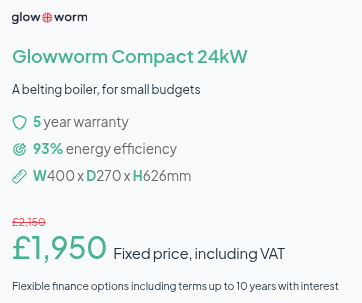
It makes little sense fixing an old, unreliable and inefficient boiler. You can get a new one (from £1,950) that will come with a long parts and labour warranty from brands like Ideal and Vaillant.
Here’s an example of how inefficient old boilers are in comparison to new A-rated boilers:
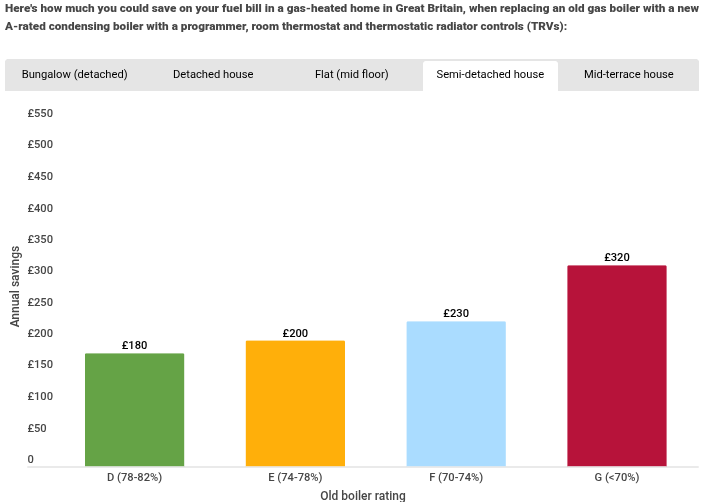
Consider energy savings (estimated at £180-£320 per year), a £500-£600 repair bill and the fact a new boiler will come with a 5-12 year parts and labour warranty. It starts to make a lot more sense to replace, rather than repair.
Use our clickable get a quote tool here. You’ll have prices on-screen in less than 90 seconds.
If your boiler is displaying a fault code that relates to gas pressure or supply, your engineer will need to inspect the gas valve. Without consistent flow from the gas valve, your boiler won't be able to ignite or produce a flame.
Gas valve faults come in various forms. Typically, the valve can become stuck. If it's not stuck, there's a chance that there's a solenoid/connection issue.
Your gas engineer will need to inspect the gas valve and attempt to free it if it’s stuck. If the valve still fails to operate, they'll want to inspect (and fix) electrical connections.
Not all old gas valves can be fixed, but they can be replaced. A replacement gas valve could cost anywhere from £250-£350 by the time you've covered costs for diagnostic, parts and labour.
Like a boiler PCB failure, you'll want to weigh up whether you want to invest this kind of cash into an old boiler.
You can compare repair costs with a new boiler by using our boiler quote form here.
Prices for new boilers (including installation) start as low as £1,950:
One of the first things to check if your boiler has stopped working? System pressure. Low system pressure is one of the most common reasons a boiler stops working.
If you’re seeing the F1 boiler fault code being displayed, your issue is low pressure. The F1 boiler fault code is relevant to the following brands:
The most common cause? A small leak somewhere in your system. Leaks could be coming from a multitude of places including:
To top up your boiler pressure, it’s easily done via the in-built filling loop on most modern boilers.
A typical system would be pressurised to 1-1.5 bar when cold and 1.5-2 bar when hot. If your system is sub 1 bar when cold, it’s likely low pressure is the issue (even if a fault code isn’t displayed).
However, simply topping up the system isn’t wise. It’s likely there’s a leak. The more pressure you add, the faster water will leak from your system.
We’d suggest having a boiler engineer inspect your system. They’ll need to:
This in turn drops pressure, so they will need to top up/bleed until the system is at the correct pressure.
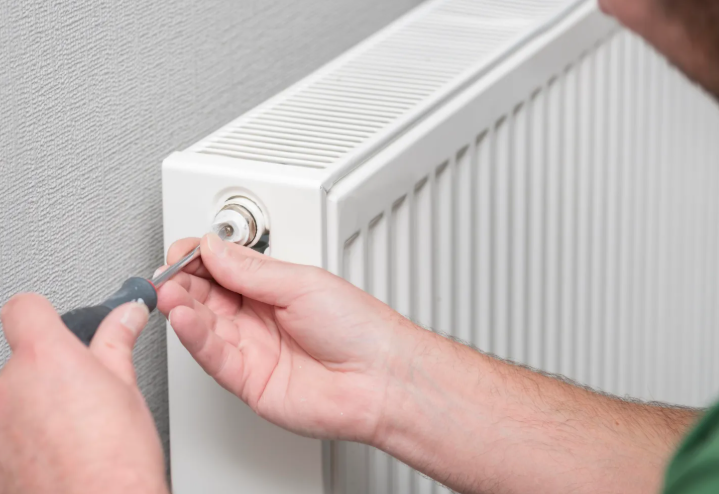
If the fault code on your appliance relates to "boiler overheating", water temperature will spike to an unsafe limit, and your unit will lockout.
Typical causes of a boiler overheating include:
Alongside a relevant fault code, expect overheating to be the issue if you have hot pipes but cold radiators, or hear a "kettling" type noise coming from your boiler.
Typically, this can be fixed by bleeding air from the system, as well as a chemical flush.
Your system builds-up limescale and heating sludge (rust from pipework etc) over time. This creates a thick sludge that can block up heating components. Flushing this using chemicals and resetting the boiler is usually enough to clear the issue.
On occasions, limescale and sludge build-up are severe. This can damage both the boiler’s pump and heat exchanger.
This is all model dependent, but expect repair costs to be:
As with any expensive boiler repair, you'll need to decide if fixing your old and unreliable appliance is the way forward.
Compare your repair quotes directly with a new boiler quote here.
You’ll be able to get a Glow-worm boiler for as little as £1,950, or a Ideal boiler starting at just over £2,200.
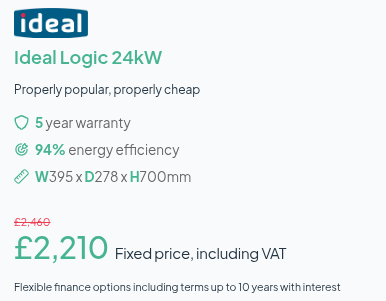
Fault codes relating to a boiler not igniting include F28/F29 (Vaillant and Glow-worm) and L2 (Ideal Heating).
Typically, this error code is displayed due to:
As you've guessed, a boiler that won't ignite isn't likely to be a quick fix.
Get a gas engineer to inspect the system’s water pressure, gas valve, gas pressure, ignition lead and burner.
Most commonly, this is either low system pressure or a blocked burner. System pressure can easily be topped up (assuming there isn't a leak).
Burners can usually be cleaned. If yours is beyond cleaning or repair, expect a new one to be in the region of £300-£400.
On combi boilers, the diverter valve tells the boiler whether to push heat to hot water or heating. It will always prioritise hot water. So, if you run a tap whilst the heating is on, the diverter valve will flick to hot water, then back to heating once you turn off the tap.
A common issue with diverter valves is that they get stuck. This could mean you get radiators that are partially warm, or cold/luke-warm water from taps.
A Gas Safe engineer can usually free up a stuck diverter valve by taking it apart.
However, there is a quick way to try and fix it yourself. Simply put on your central heating then:
On occasions, this is enough to free up a sticking diverter valve. We’ve got a more detailed guide to faulty diverter valves here.
There are various fault codes that will mention errors relating to the likes of:
During the freezing months of the year, many emergency call outs are for a condensate pipe that’s blocked…with ice.
The condensate pipe is the small white pipe (not the larger one, which is the flue) on the exterior of your property. It vents waste gases and vapour from your boiler.
The colder it is, the more likely these gases and vapours are likely to freeze. And, if they do, that’s going to cause a “blockage”.
Your boiler’s PCB gets signals from sensors saying there’s a blockage, and locks out your boiler until the issue is fixed.
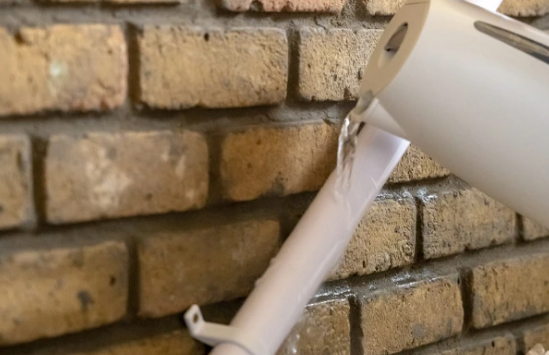
Thaw out the condensate pipe using warm water.
It’s important to:
Once the condensate pipe is thawed out, the boiler can be reset and this will clear the fault code on the display.
Finally, if you’ve noticed that your boiler has no power, here are some common culprits:
If your boiler has nothing on the display and isn't making noise, one of the above is likely to be the issue.
Your boiler engineer can systematically test the likes of the:
This is usually an issue that's quick to diagnose and cheap to fix. The only exception here is a PCB replacement (£500+).
For further reading, check out our detailed guide to boilers with no power here.
Using our clickable form, you can get a free boiler quote here.
Try our free quote tool. You'll have your personalised quote in under a minute.





.svg)


)%20(1).PNG)
%20(4).PNG)